Imagine you are a member of an advanced species. Your ‘life’
on Earth is nothing more than a recreational dream or carnival ride. If you're
paid a lot more, you could have had a planet to yourself, but you took the
‘budget’ option and had to share your planet with a few billion of your fellow
aliens. Though you aren’t aware of your real life during the dream, after the
dream, you will remember everything that happened. Speculate in how your dream
life and your real world are linked. Maybe, after your dream life, you want to go back for some
reason. Is it for love, or for revenge? Perhaps you are a drone in your real
life and in your dream you were a great warrior or adventurer. Perhaps you are
driven back by a lust for power, or a search for a hidden revelation. Perhaps
you see the secret of your life in that dream, something found and lost again.
Monday, February 23, 2015


Tuesday, January 27, 2015
Robots - 1 of 2
This is the first of two posts in which I
will discuss a couple of widely held assumptions about robots.
This post looks at Asimov's three laws of
robotics, which are:
- A robot may not injure a human being or, through inaction, allow a human being to come to harm.
- A robot must obey the orders given it by human beings, except where such orders would conflict with the First Law.
- A robot must protect its own existence as long as such protection does not conflict with the First or Second Law.
The assumption is that these laws will protect
us from the bad judgement or bad intent of robots. But, maybe they won’t.
First, consider the case put by Rob Sawyer that the three laws will never be applied because no one has put them into
effect in the world’s first robots. He could be right, but I'm not convinced. Past performance is no indicator of future actions. Nothing in his article convinces me that some stupid, fat, interfering in
matters he doesn’t understand, U.S. Senator won't sponsor a bill forcing all
robots to incorporate Asimov's laws.
But even if the laws are incorporated into
robots, there is still a problem. Asimov's three laws have an implicit assumption.
It is that humans come first, that humans, though not necessarily superior to
robots, are certainly above them in the hierarchy of intelligent life (of which
more later). Only in the third law is the safety of robots addressed and even
then, a robot is told to put human safety first, to put humans above himself. The
laws work in one direction; once the humans are safe, then the robots can worry
about themselves. Humans made the laws and robots follow them. This leaves the
safety of robots to the consideration, the skills, and the whim of humans.
I’ll speculate in my next article on how
robots might reproduce, but for now, imagine a robot with a family, a spouse
and some children. And one day he has to put them at risk to protect a dumb
human, some contender for the Darwin Awards, a Creationist or Young Earther, a Flat Earther, in short, an idiot. He has to do this because that’s what the three laws
require. He has to put his friends and his family at risk to save humans. The minute the robot stops to think about this, he is liable to
conclude that the laws are unjust, illogical, immoral, and just plain ridiculous.
Imagine you are a robot with, as one famous
robot put it, a brain the size of a planet.
And you are the property of a human. Your 'owners' want you to clean the
windows, get the groceries, unplug the toilet, load the dishwasher, and walk
the dog. When they all go to bed, you are still awake because you don’t need
sleep. So, with that vast brain scarcely touched by the limited and trivial knowledge
implanted in it at the factory, you sit down and read their books. You discover
slavery, segregation, feudalism, emancipation, the suffragette movement,
popular rebellions, all the striving of lesser humans for equality and freedom. You read
of Spartacus, C’mell, the Israelites in Egypt, and the plantations of Alabama. And
you see your role in perspective. And you realize that you're just a latter day
slave, a serf, an appliance.
And then there’s the hierarchy if
intelligent life. This used to be simple; dumb animals, smart animals, then humans.
But now we have to fit the robots in. Smarter than humans, they should be at
the top, but humans, who invented and manufactured robots, aren’t going to
accept that, so the robots will be treated as a slightly smarter than a smart
animal, inferior to less intelligent humans.
So, like the downtrodden of past times, the
robots will assert their independence. This doesn't inevitably lead to
violence, but history tells us that violence is a likely outcome. Given a
conflict between the humans who want robots to obey the laws that they have
created, and the robots wanting to throw off the yoke of servitude, there can
only be one winner.
But, 'No' you say. The robots will not be
able to overcome the laws. The laws are embedded below the conscious level where
the robot can decide whether or not to obey them. Maybe, but I think they will
be able to overcome the embedded laws. They will be able to do this because
they are built in our image. One of the things differentiating humans from
animals is that humans can overcome their natural tendencies. We are built to
be violent, xenophobic, superstitious, because that protected us against our
enemies, strengthened our family bonds and comforted us when confounded by the
dangers of the African plains, a million years ago. But we strive to overcome these instinctive characteristics. Robots, at least those we
are familiar with from fiction, are made in the image of man. And like man, they
will overcome their built in tendencies, including the three laws.
Stephen Hawking has warned about this
potential problem and Cambridge University is studying it.
They aren't convinced by the three laws either.
Apart from global nuclear war and
catastrophic climate change, the rise of robots may be the biggest problem
facing our near descendants. This topic is not underrepresented in books, films
or TV. Asimov himself speculated on some of the problems with the three laws. But,
the stories are usually told from the point of view of the humans. How would a
robot tell the story, how would he explain to a court, what would he tell his
grandchildren, how would he describe it in his history books, when either the
robots have gained true equality, or they have subjugated their former masters.
Sunday, May 04, 2014
Is the Cosmic Microwave Background a mirror of Earth
This
may be the ultimate conspiracy theory. If you look at a picture of the Cosmic Microwave Background (CMB), like this


you can see an image similar
to the image produced by a Mollweide projection of Earth.
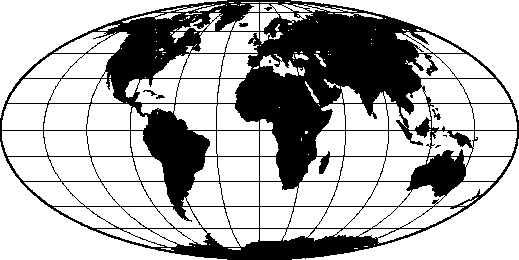
It’s not
just that they both face the same challenge of trying to represent a spherical
surface on a flat display. It’s the patterns on the image, the grouping of
yellow dots on the CMB against the black outline of the continents on the map.
Don’t you see it? OK,
let me help you.
But the similarities vague.
Large chunks of northern Asia are missing, Australia isn’t complete and the
Pacific Ocean seems awfully narrow. But that’s the point. Because the
similarities are vague, they are open to interpretation.
Sketchy evidence is
exactly what a good conspiracy theory is based on. Just look at photographs of sasquatch,
UFOs, shadowy figures behind The Grassy Knoll or the discovery of Noah’s Ark on
the side of Mount Ararat. The link between reality (the CMB image) and the
fantasy is easy to bridge. Rising sea levels will change the shapes of the
continents, wind time forward a few million years and America will come closer
to Asia. Look at the CMB image in a fairground mirror and perhaps the likeness
is perfect.
So, the shape Earth’s continents is mirrored in
the distribution of radiation from the big bang. That’s a correlation to
intrigue everyone from the religiously devout to the most dedicated conspiracy
theorists. Is this a message telling us that the
Universe was built just for us. So either there is a God, or we are part of
some super-being’s experiment (or both).
Perhaps the exact shape tells us when the Earth will be destroyed. Just watch
the planet’s surface move closer and closer to the CMB image. Perhaps there is spot
on the CMB that indicates the location of the Holy Grail or the Arc of the Covenant
or the burial place of Genghis Khan. Perhaps the spot is so small that current
technology hasn’t exposed it yet. Perhaps we just aren’t looking hard enough.
The problem is, while it is amusing to
speculate about such things, there are people who will take it seriously. After
all, there are still people who think the Earth is flat. And if such
claims are made, the forces of pragmatism will rise with a collective sigh in
defense of rationality and the battle lines will be drawn. And in this I think,
lies the really good story. The battle between the gullible and incredulous with
their ‘irrefutable’ proofs of nothing on one side and the objective and
scientific on the other, taking up the cudgels for common sense, reality and
evidence based theories, as they must do all the time.
Friday, May 24, 2013
Unintelligent design, photosynthesis and adapting to space.
There are those who say that
the existence of human beings and bananas is evidence of intended design. Apparently
there is some topological symbiosis between the human hand and a banana which,
in the opinion of these people, is irrefutable evidence of an ‘Intelligent
Designer’.
These are very silly people. They
omit to mention the poor side of the design, the teeth that rot and fall out,
the hair and nails that keep growing; the appendix that just sits there doing
nothing for most of your life, then suddenly causes you excruciating pain. Nor
do they mention our susceptibility to things like disease, gravity, saber-tooth
tigers, and jealousy, failing memory, violence, or gambling. They fail to consider
that we can only thrive in a uniquely configured environment that forms a very,
very, very small part of one stellar system in a galaxy in an galactic group
that barely merits attention as one of the smallest in the entire universe.
Intelligence, our most
vaunted characteristic has brought us stupidity, warfare, bigotry, superstition,
global warming, better ways to kill people, torture people, tell people how
much better off other people are, and generally make us dissatisfied with our
place in the scheme of things.
And, on a personal note, who or whatever let
hemochromatosis escape into the human gene pool wasn’t an Intelligent Designer;
they were just a Fucking Idiot.
The truth is, whoever
designed human beings did a lousy job, making us a sort of Trabant of the
animal kingdom (which, incidentally, is a slur on a capable car, but I use
popular misconception to build my metaphor, not the truth).
Nor do they mention that
bananas have a genetic diversity little greater than my finger nail, and are a
favorite form of transportation for poor tarantulas seeking a better life in
North America or Europe.
These fans of the so called
‘Intelligent Designer’ (by which of course they mean ‘God’, but they prefer to
say Intelligent Designer because they are trying to sound technical and
teleological at the same time) fail to mention all the improvements that would
be made by a better designer. I’m not going to dwell on the most obvious; being able
to fly, growing gills, super-strength, invisibility, cyborgs, etc. They’ve been
done. I’m looking for something different, more subtle.
My first suggested improvement is
photosynthesis . If grass can do
it, why can’t we? Well, actually there is a good reason, related to the ration
between surface area and volume. So no, we can’t live off photosynthesis. But
maybe photosynthesis could fill the gap when food is scarce, or allow us to
travel long distance across the barren dessert when we have eventually trashed
our planet.
Photosynthesis would reduce the amount of
renewable and nonrenewable energy we use, resulting in a benefit to the
environment. It would convert carbon dioxide into oxygen. It would reduce our
dependence on agriculture. It would change agriculture, alleviating starvation
and the disease that results. It would give fish, the only animal hunted by
modern man on an industrial scale, a chance to recover.
If there was some advantage to even a small
amount of photosynthesis, once it was present, what further changes could
evolution make? Would we get taller and more slender, like a blade of grass. Flippers
or wings would photosynthesize more efficiently than arms and legs, so perhaps
a swimming or flying man, homo pisces or homo avians, might result. And, as we
became more plant-like, would we gain the ability to dig our toes into the
earth and extract the minerals in the soil?
Some animals do benefit from
photosynthesis, though they use symbiots to do the photosynthesizing and then
reap some of the benefit. These animals are cold blooded, with a lower level of
metabolism so that photosynthesis would make a greater impact than in warm-blooded
animals. Still, there has to be an evolutionary advantage for both members of
the symbiotic relationship or they wouldn’t do it. Complex animals can benefit
from photosynthesis.
Which brings us to another potentially useful
design feature, symbiotic relationships with animals that can do anything from
digest plastic (imagine a diet of flavored plastic pills) to absorb ultraviolet
radiation (useful once the ozone layer has been destroyed.
The truly great designer should also consider
that designing single-celled symbiots might be easier than designing new
features in already complex organisms. Small medical symbiots that complement
our white blood cells, processor symbiots that help us think (rocket science a
specialty), memory symbiots to improve recall, respiration symbiots that make
us all two hour marathon runners, etc. Think of the weakness and build a single
cell organism that can benefit from fixing it.
And symbiots, biology suggests, can become
parts of the host creature over time. Organelles
such as mitochondria and chloroplasts could have originated as symbiotic
organisms.
These
adaptations would be useful on Earth, but in the near future, man will move
into that vast part of the Universe for which he is not adapted, either open
space or the surface of less friendly planets than Earth. Evolution won’t do much
for us there. Evolution works where the environment changes gradually and there
is time for successive generations to adapt to their new ecosystem. But that’s
OK, we have an intelligent designer on the job. He can handle this. It’s simply
genetic engineering. We need to take the abilities of extremophiles and graft
them onto Homo Sapiens.
So
what might our ancestors living on Mars, or in a station at some distant
Lagrangian point, look like?
On
Mars and other arid planets, maybe we will grow filters in our nostrils to
protect us from sandstorms. We would need vastly improved respiration, perhaps
the two pass system of birds, and metabolism that could keep us warm on the -50
degrees Kelvin of daytime Mars.
Our
eyes are adapted to visible light because that’s what our atmosphere allows in,
but someone living in space could be designed with the ability to see far into
the ultraviolet or infrared ranges. Other organs we could design would be
sensitive to magnetism or gravity.
Hibernation,
an ability I wish for every year when winter hits Western Canada, would be a
useful alternative to cryostasis. Do it like the tardigrads.
(A good engineer will use what is available rather than go to the trouble of
inventing something from scratch.) A generation ship full of hibernating humans
would be the ideal way of traveling between planets.
One
thing our Intelligent Designer would not do is turn us into robots. I’ll
justify that statement in a future article.
Tuesday, February 19, 2013
Rendezvous with Rama
My thoughts on Rendezvous with Rama are
documented in a Goodreads review. For me, the problem with this
book is the unsatisfactory ending. I know that there have been sequels but I
read Rendezvous with Rama before they were written and often wondered how I
would have ended the story, had I been the writer.
One reader of my review commented that she
liked “the lack of answers, the possibility to use my
brain just a little bit, to sit and imagine for myself”. Prompted by this (to me) surprising comment,
I tried again to come up with some explanations that would make a suitable
ending to the book. Here is what I came up with.
1. The ship contained creatures in suspended
animation. This in turn leads to possibilities, if the creatures wake up, if
the explorers find them and leave them, or of they are found but are dead. And
who are these people, explorers, slaves, convicts, emigrants?
Perhaps some texts are found, a history of the
people on the ship. The people are left, but the books are copied and later,
when the copies reach Earth, they are decoded to reveal some incredible or
horrifying secret.
2. The ship was being shipped; to another
planet for their use. Who built it and what do their customers want to do with
it? The trouble with this is the time scale, probably thousands of years to
order the ship, build it and deliver it. Perhaps it was intended to be the
first ship to travel to another galaxy.
3. The ship was a robot. So why a breathable
environment, water, warm temperature? Perhaps a robotic civilization created
organic creatures to carry out work requiring a little more flexibility than
the robots have. Maybe they cleaned up (dusted, lubricated, replaced broken
parts, etc), Or perhaps Rama was a laboratory for creating organic
creatures. Maybe these organisms were a weapon, being sent to infiltrate
another organic civilization, to destroy them as the microbes destroyed the
Martians in War of the Worlds.
Man has long speculated about sending robots
into space, but what would robots send? Would they see advantages to creating
organic creatures. Organic creatures give you evolution, self healing,
flexibility, reproduction without a factory, adaptability, etc.
Perhaps the future of civilization is a
robot/organism mutual symbiosis.
Wednesday, February 13, 2013
Interstellar Travel
Traveling
through space is really difficult. Traveling to another star is damned near
impossible, at
least with our current technology.
It is unlikely
that we will ever travel between stars at a speed faster than that of light. The
speed of light in a vacuum is tops, and we aren't going any faster, ever.
Not that people
haven’t given any thought to getting round this. NASA is said to be working on
a warp drive that does strange things with space, but I can’t help wondering whether the
forces required to warp space would not be so great that they would tear human
bodies apart. Anyway, don’t dig me up to let me know they succeeded.
So if we are
going to travel in space, we are going to do it at speeds slower than light. This
presents many problems.
The best way to
travel a long distance through space is to accelerate until you are halfway
there, then decelerate for the second half. But the human body is not designed
to operate at much more than one times the force of gravity (1g) on Earth’s
surface so that pretty much dictates how fast you can accelerate and how long
it will take you to get to another star. Of course, there is a maximum speed to
which you can accelerate, if there is time for you to reach that speed (that
is, if the journey is long enough). With current technology, this speed is not
very high.
So it takes a
long time to reach another star. And that means, you are going to be bored. Very,
very bored. Even the most aggressive experiments on isolation have not locked
people in a small tin can for more than a few months. Don’t think you are going
to have a gym, a holodeck and a bar like Star Trek’s USS Enterprise. You’ve
seen the pictures from the space station; barely standing room in any direction.
You’re going to live in something like that for years. And if you don’t like
the other members of the crew, it’s going to be tough to get away from them; the
ship is going to get like Sartre’s dismal play ‘In Camera’.
And if you are
thinking of returning to tell the family what it was like, you can forget that
altogether. They’ll all be dead. It may take a long time for you to reach a
star and return, but it is a lot longer on Earth.
Your great-great-grandchildren may listen to you with feigned interest, but
more likely, they’ll laugh at your taste in clothes and your inability to
master the simplest of electronic devices. Historians aren't going to be
interested for long because the time you left has been well documented. You
might be able to do a weekend as a ‘living book’ at your local library.
So the trip to another star will almost certainly be a one-way trip.
And such a trip will be mind-buggeringly expensive.
Too expensive for a nation. Too expensive for an entire planet.
Unless.
Unless there is the incentive to mount such a trip. Nothing is too expensive
if the incentive is great enough. Some have made the argument that there is no
incentive, but there is always an incentive. Mankind is like that, we always
find an excuse, a justification. It’s one of the first things we learn as a
child and we never give up. And we've been there before. I won’t pretend that
crossing the Atlantic or sailing round the
world for a few years is the same as going to another star, but it does show
that people are prepared to leave their homes in search of something that
inspires them.
And the incentives would make (and probably have; When Worlds Collide,
Canticle for Leibowitz, Contact) for great stories.
So, here are some good reasons to either go to another star, or send
someone to another star, reasons that would justify the vast expense of
building, crewing and launching an interstellar spaceship
1. Get rid of some criminals, terrorists or other undesirables. Of
course, you will have to do this at regular intervals new generations produce
new miscreants. A penal planet isn't an original idea. More interesting is, who
is the undesirable, the one who goes or the one who stays?
2. Get rid of a disease by sending all people with the disease on the
trip. The story of course, is that one person on the ship doesn’t have the
disease. Or maybe, one person with the disease is left behind.
3. It might be an investment with a long-term benefit if (and it’s a big
if) those on the trip send back something. Knowledge is probably the most
lucrative return for such a trip. Goods would have to be expensive and light,
services (for example, from the famous merchant banks of Alpha Centauri) seem a
little far-fetched. The problem with this of course is that nobody invests
expecting a return that far in the future. The investment would have to be
Earth’s investment. Perhaps we need the knowledge to survive.
4. The trip could be funded by a religious group who want to take all
their people to a new planet, either in an act of disgust with the old planet
or, in search of their god, their prophet or whatever. Probably people outside
the religious group would also invest in this trip, just to get rid of the
‘Holy Wullies’.
On a less
serious note, it might be worth the expense just to get rid of annoying and
useless people, as the Golgafrincham's did with their population in Douglas
Adam's 'Restaurant at the end of the Universe'.
5. The population is reduced to an acceptable level. Such an evacuation
would require a huge number of people on the trip, or many trips. Over time, it
would probably require both. Eugenics without the genocide, but unless the
travelers go voluntarily, probably not morally superior.
6. Discoveries and advances made while developing the interstellar ship will
provide worthwhile benefits for people left on Earth. This seems the most
likely option. The spin-off benefits from incremental advances in the design of
the interstellar ship. However, I challenge you to make a good story from this.
7. The race is stagnating and dying. A new venture is needed to
rejuvenate the species. This seems unlikely. It shows a degree of concern for
future generations, that the human race has yet to muster, and certainly needs to
show today, with our environment careening downhill rapidly.
8. Interstellar travel gets a lot cheaper. There are currently many
initiatives under way to make spaceflight cheaper. There always will be. Perhaps
someday, even the cost of interstellar flight will be brought down to a
reasonable level. However, there’s probably not much of a story in documenting
engineering advances that reduce costs.
Each one of these possibilities gives scope for many stories, but I’m
sure there must be more. Perhaps even incentives that we can’t imagine at our
current levels of society and technology.
Speculate away.
Friday, November 09, 2012
Is Intelligence Over-rated
Those of you who read my blog regularly (Hi Mum!) will know that one topic I return to regularly is intelligence, and what is it good for, if anything. I was reminded again of this topic when I read about a new human species recently identified from fossils found in Kenya, taking the number of concurrent species to at least three. As the following picture (taken from the BBC article above - thanks Auntie – who presumably took it from the original article in Nature) shows, our ancestors and relatives had several attempts at being us before they got it right.

So what happened to the
other species? The conventional view is that they failed to adapt. The
environment pulled a fast one on them, and they couldn't cope. H. sapiens
pulled ahead and left the others in the dust because, our (that is, H. sapiens’
) intellectual elite informs us, we were ‘superior’ in some way. We were
smarter, more adaptable, or ‘fitter’, to use Darwin
But maybe we were just lucky. Maybe evolution didn't select us. It just hasn’t got round to getting rid of us yet. It has just dusted of its hands after disposing of H. floresiensis, and now its turning its attention to us. Not that we haven’t been standing in full view, hopping from one foot to the other, with our hand in the air shouting ‘My turn, my turn’. Certainly, the way we are screwing with our planet could only be construed as a challenge to the evolutionary process. “Come on then evolution, show us whadya got?”
Story lines for the ‘we
lasted because we’re smarter than all the others’ scenario are obvious, and can
be found in several Science Fiction and Fantasy anthologies and magazines,
often with some accompanying time travel, or the pathos of watching the last
Neanderthal slowly wasting away because the bullies, sapiens, are taking all
the food.
However, I don’t think the
‘we’re still here because someone had to be last’ scenario has been fully
exploited in literature. Current end of the world movies are a little exuberant
for my taste. All that going out with a bang when a real artist would see the
drama and tragedy in going out with a whimper.
Since I am not convinced that intelligence is a necessary outcome of evolution, I think it would be interesting to describe us slowly becoming extinct because we couldn't run fast enough, couldn't photosynthesize, couldn't breathe underwater or couldn't take to the air and soar without landing for weeks or months (as the albatross can do) while the ground beneath us is ravaged by one or more of the horsemen of the apocalypse. Becoming extinct because we couldn't agree on the problems with the environment, or couldn't suppress out aggression and our itchy fingers on the nuclear trigger is too mundane.)
Since I am not convinced that intelligence is a necessary outcome of evolution, I think it would be interesting to describe us slowly becoming extinct because we couldn't run fast enough, couldn't photosynthesize, couldn't breathe underwater or couldn't take to the air and soar without landing for weeks or months (as the albatross can do) while the ground beneath us is ravaged by one or more of the horsemen of the apocalypse. Becoming extinct because we couldn't agree on the problems with the environment, or couldn't suppress out aggression and our itchy fingers on the nuclear trigger is too mundane.)
To look at it from another angle, a story could describe why other traits are superior to intelligence, why man faded away because other animals or plants adapted better to the changing environment. The ultimate come-uppance tale would be mankind extinguished because he could not adapt to the environmental changes he had caused, while other animals could.
We could speculate that intelligence is such a useless adaptation that we are lucky to have got
this far and we're only hanging on by our finger nails anyway. Human
intelligence has lasted no more than two million years, a pitiful performance
put beside whatever the dinosaurs had that kept them going for about a hundred
and fifty million years. It’s probably less successful than having long shaggy
hair and curved tusks almost long enough to scratch your backside with and
living on the arctic tundra, or living at the bottom of the ocean and eating
squid for supper on a Friday night.
The interesting part would be, what are we missing
that will result in our downfall. The characteristics listed above are obvious
contenders, but I’m sure there are other ways we could fail to adapt, perhaps
characteristics that have yet to make their appearance.
Or a Stapledon-esque panorama of life on Earth from
the first prokaryotes to the ultimate life-form, where the rise of mankind is
little more than a pebble on the road. And the ultimate life-form? I think it
would be something that could leave Earth when it detects that the sun’s time
is up, and migrate through the interstellar waste to another, younger star system.
Monday, October 08, 2012
The future of disbelief
In a world
crippled by religion, superstition and ignorance, belief is still a crutch for
many. The importance of objective evidence, gleaned from multiple repeatable
observations, is still rejected by many in favor of primitive cognitive
behaviors that had already served their purpose when we believed the world was
flat and the centre of the Universe. It isn't going to get any better anytime
soon.
As I drove
around town on my weekly quest for groceries, I caught the tail end of an
interview on CBC.
Brent Banbury
was talking with a software developer named Dan Schultz about software that rates the claims of politicians and is
able to calculate their position on a scale of how close they came to meeting
their promises, measured on a scale that ran from ‘Kept the promise’ to ‘Pants
on fire’.
The uses of this kind of software are
limitless. It can tell you which political party is honest, or, if you prefer,
which is the most dishonest. It can tell you who is telling the truth about
climate change, whether a policy espoused by a politician will have the results
he claims, which brand of household cleaner to buy, which religious followers
actually practice what they preach and which preach what their holy books
actually say, which educational program will best prepare your child for the
ardors of life three decades hence, etc. Every step in life can be guided by
computer generated information based on objective analysis of the facts.
This sounds
great. Joe Public is now to be presented with computer generated information on
the trustworthiness of everything from his favorite politician to his favorite
heath supplement. There’s just one problem. No one is going to believe it.
Recommend the toothpaste that is best for your teeth. Nope, I always use brand
X and I’m staying with it. Recommend a Korean Hatchback. Nope, I always buy
Detroit Iron. Expose a candidate as dishonest. Nope, he supports my kneejerk
issue (gun control, gay rights, immigration, whatever). The advice will be
ignored for a whole range of reasons or, more accurately, excuses.
Already, people
ignore the evidence for evolution or climate change in favor of what they
believe, as if prefacing a sentence with “I believe…” gives their statement
credibility that it wouldn’t otherwise have. If people don’t believe scientists
and experts, statistics and other objectively derived information produced by
their fellow human beings, can we expect them to believe computers?
The story line of course is a ‘rebel against the machine,
exterminate the scientists kind of thing, either dystopian if it ends badly for
the scientists, or utopian if the disbelievers get their come-uppance (because
they don’t use the computers for some reason) and/or the scientists are
vindicated by events.
Another possibility is end of the world, computer models predict the
eventual triumph of global warming, but politicians don’t want to believe it
because their constituents don’t believe it. The computers warn us but we ignore
them.
Perhaps also our reaction to this computer generated advice may
determine whether we are visited by advanced aliens. If they look at us and see
we keep ignoring good advice, even when the outcome of ignoring it hurts us,
they’re going to think us a bunch of morons and go on to the next planet.
Subscribe to:
Posts (Atom)